Reduzierte Artikel in dieser Kategorie

5,99 €
4,99 €
15,99 €
| Verlag | Verso |
| Auflage | 12.07.2022 |
| Seiten | 288 |
| Format | 14,2 x 2,3 x 21,8 cm |
| Hardback | |
| Gewicht | 368 g |
| Artikeltyp | Englisches Buch |
| EAN | 9781839765926 |
| Bestell-Nr | 83976592UA |
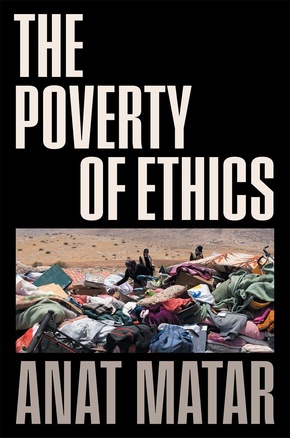
The Poverty of Ethics stands the usual moral-political dichotomy on its head. It argues that moral principles do not in fact underlie or inform political decisions. It is, rather, the conceptual primacy of political discourse that rescues ethics from its poverty. Our ethical convictions receive their substance from historical narratives, political analyses, empirical facts, literary-educational models, political activity and personal experience. Yet morality, essentially, doesn’t leave room for relativity: not every ethos deserves to be titles ‘moral’. Hence the book argues further, it is the left ethos, as it has evolved over years, which forms the basis for ethics: morality is left-wing! Clarifying and justifying this seemingly odd statement is the main purpose of this essay.
Appealing to philosophical ideas on the essence of language, on meaning, on understanding and persuasion, this book scrutinizes the system of concepts and attitudes informing our common view of the relationship between the moral and the political. It argues that the traditional conception of morality is far too narrow to form a basis for political thought and political action. Its carefully unfolded argument concludes that none of the current philosophical accounts of morality can be translated into terms of political will, much less into direct political action. Being too general and elastic, neither abstract moral principles, ethical-aesthetic sensibilities, nor the ethical demand emanating from an Other, can fulfill these tasks. Instead, the false primacy of the ethical over the political and the infinite flexibility of vacuous moral discourse are often mobilized to launder wrongs and delegitimize radical left politics. Gratification of the moral high ground becomes an implement of de-politicization, and thus a powerful political instrument in the hands of those seeking to shore up the existing order.
