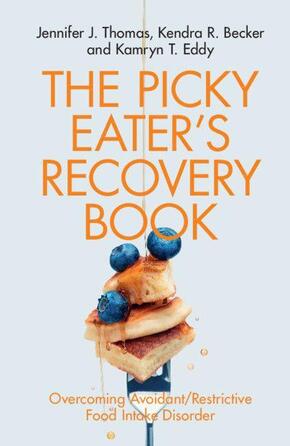
The Picky Eater's Recovery Book - Overcoming Avoidant/Restrictive Food Intake Disorder
Reduzierte Artikel in dieser Kategorie

5,99 €
| Verlag | Cambridge University Press |
| Auflage | 12.08.2021 |
| Seiten | 280 |
| Format | 13,0 x 2,5 x 19,7 cm |
| Gewicht | 350 g |
| Artikeltyp | Englisches Buch |
| EAN | 9781108796170 |
| Bestell-Nr | 10879617UA |
Are you a picky eater? Do you worry that food will make you vomit or choke? Do you find eating to be a chore? If yes, this book is for you! Your struggles could be caused by Avoidant Restrictive Food Intake Disorder (ARFID); a disorder characterized by eating a limited variety or volume of food. You may have been told that you eat like a child, but ARFID affects people right across the lifespan, and this book is the first specifically written to support adults. Join Drs. Jennifer Thomas, Kendra Becker, and Kamryn Eddy - three ARFID experts at Harvard Medical School - to learn how to beat your ARFID at home and unlock a healthier relationship with food. Real-life examples show that you are not alone, while practical tips, quizzes, worksheets, and structured activities, take you step-by-step through the latest evidence-based treatment techniques to support your recovery.
Inhalt:
Dedication; Foreword; Preface; Acknowledgements; Part I. All About ARFID: 1. What is ARFID?; 2. Do you have ARFID?; Part II. Getting Started (Stages 1 and 2): 3. How does ARFID work?; 4. Regular eating and early change; 5. Identifying what else needs to change; Part III. Tackling What Keeps Your ARFID Going (Stage 3): 6. Sensory sensitivity; 7. Fear of aversive consequences; 8. Lack of interest in eating or food; 9. Shape and weight concerns in the context of ARFID symptoms; Part IV. Moving Forward (Stage 4): 10. Continuing to make progress and preventing relapse; 11. Conclusion; References.
