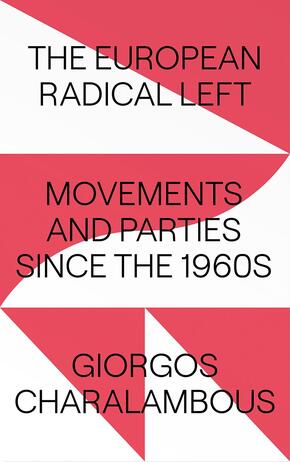
The European Radical Left - Movements and Parties since the 1960s
Reduzierte Artikel in dieser Kategorie

10,99 €
10,99 €
14,99 €
13,99 €
10,99 €
10,99 €
| Verlag | Pluto Press |
| Auflage | 20.12.2021 |
| Seiten | 368 |
| Format | 14,3 x 2,7 x 21,5 cm |
| Gewicht | 364 g |
| Artikeltyp | Englisches Buch |
| EAN | 9780745340524 |
| Bestell-Nr | 74534052EA |
'Is today's left really new? How has the European radical left evolved? Giorgos Charalambous interrogates his subject across three periods of intense political rupture - the late 1960s to late 1970s; the turn of the millennium; and post-2008. He challenges the conventional understanding of a 'new left', recognising the significance and problems inherent in language and labels. He examines the 'Long '68'', symbolised by the May uprisings in France, which saw the rise of new left forces and the widespread criticism by younger radical activists of traditional communist and socialist parties. He puts this side by side, with the turn of the millennium when the Global Justice Movement rose to prominence and changed the face of the international left, and also the period after the financial crash of 2008 and the rise of anti-austerity politics which initiated the most recent wave of new left parties such as Podemos in Spain and Syriza in Greece. With a unique 'two-level' perspective, Charalambous approaches the left through both social movements and party politics, looking at identities, rhetoric and organisation, and bringing a fresh new approach to radical history, as well as assessing challenges for both activists and scholars.
