Reduzierte Artikel in dieser Kategorie

10,99 €
10,99 €
5,99 €
10,99 €
8,99 €
15,99 €
5,99 €
10,99 €
10,99 €
10,99 €
8,99 €
| Verlag | Harvard University Press |
| Auflage | 14.01.2025 |
| Seiten | 368 |
| Format | 16,5 x 3,0 x 24,0 cm |
| Gewicht | 692 g |
| Artikeltyp | Englisches Buch |
| EAN | 9780674268036 |
| Bestell-Nr | 67426803EA |
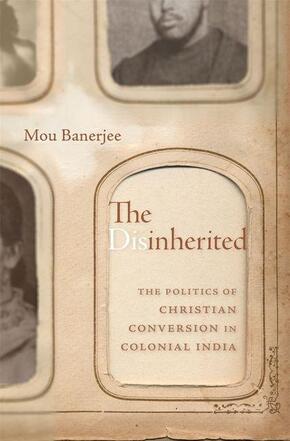
An illuminating history of religious and political controversy in nineteenth-century Bengal, where Protestant missionary activity spurred a Christian conversion "panic" that indelibly shaped the trajectory of Hindu and Muslim politics.
In 1813, the British Crown adopted a policy officially permitting Protestant missionaries to evangelize among the empire's Indian subjects. The ramifications proved enormous and long-lasting. While the number of conversions was small-Christian converts never represented more than 1.5 percent of India's population during the nineteenth century-Bengal's majority faith communities responded in ways that sharply politicized religious identity, leading to the permanent ejection of religious minorities from Indian ideals of nationhood.
Mou Banerjee details what happened as Hindus and Muslims grew increasingly suspicious of converts, missionaries, and evangelically minded British authorities. Fearing that converts would subvert resistance to British imperialism, Hindu and Muslim critics used their influence to define the new Christians as a threatening "other" outside the bounds of authentic Indian selfhood. The meaning of conversion was passionately debated in the burgeoning sphere of print media, and individual converts were accused of betrayal and ostracized by their neighbors. Yet, Banerjee argues, the effects of the panic extended far beyond the lives of those who suffered directly. As Christian converts were erased from the Indian political community, that community itself was reconfigured as one consecrated in faith. While India's emerging nationalist narratives would have been impossible in the absence of secular Enlightenment thought, the evolution of cohesive communal identity was also deeply entwined with suspicion toward religious minorities.
Recovering the perspectives of Indian Christian converts as well as their detractors, The Disinherited is an eloquent account of religious marginalization that helps to explain the shape of Indian nationalist politics in today's era of Hindu majoritarianism.
