

Reduzierte Artikel in dieser Kategorie

5,99 €
9,99 €
10,99 €
10,99 €
15,99 €
| Verlag | Distanz Verlag |
| Auflage | 06.05.2026 |
| Seiten | 208 |
| Format | 24,5 x 30,0 x 2,5 cm |
| Großformatiges Paperback. Klappenbroschur | |
| Gewicht | 1266 g |
| Artikeltyp | Englisches Buch |
| ISBN-10 | 3954768658 |
| EAN | 9783954768653 |
| Bestell-Nr | 95476865A |
Marlie Muls (geb. 1980 in Utrecht, Niederlande; lebt und arbeitet in Brüssel) Praxis ist von Materialbewusstsein, räumlichem Denken und der kontinuierlichen Auseinandersetzung mit Arbeitsbedingungen, Wertsystemen und Formen von Kollektivität geprägt. Ihre Praxis rückt ein anhaltendes Interesse an skulpturalen Fragestellungen, die unmittelbare Auseinandersetzung mit Materialien sowie Prozesse der Schichtung, Transformation, Bedeutung und Bedeutungsverschiebung über mehrere Artikulationsebenen hinweg in den Vordergrund. Zentral ist dabei ein kontinuierlicher Prozess der Aneignung und Bearbeitung neuer Materialien und Praktiken, die wiederholt aus ihren konventionellen Kontexten herausgelöst und in neue Werkzusammenhänge überführt werden. Diese werden ihrerseits von anderen Materialien begleitet und neu gerahmt, ebenso wie durch stärker soziale Formate der Produktion und Präsentation.
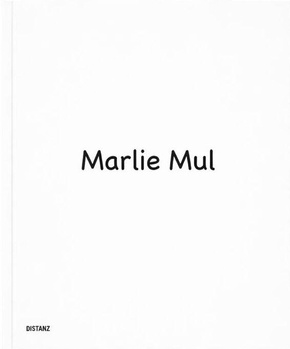
Die erste umfassende Monografie zur Arbeit von Marlie Mul erscheint anlässlich ihrer Einzelausstellung Das Budget (2025) im Kunsthaus Glarus. Sie enthält einen umfassenden chronologischen Überblick über zentrale Werkserien von den frühen 2000er-Jahren bis heute und entfaltet zudem in einem reich bebilderten Index eine komplexe Struktur aus Kontexten, Kollaborationen und Produktionsweisen. Die Publikation versammelt neue Textbeiträge von Annie Goodner, Lili Reynaud-Dewar und Frank Wasser, ein Gespräch zwischen der Künstlerin und der Herausgeberin sowie zahlreiche Wiederabdrucke von Texten, die Muls Arbeit über die Jahre begleitet haben, darunter auch eigene Texte der Künstlerin.
"Materiality and Multiplicity as Social Practice"
Melanie Ohnemus
Marlie Mul (b. 1980 in Utrecht, the Netherlands; lives and works in Brussels) is characterized by a strong material awareness, spatial thinking, and an ongoing engagement with conditions of labor, systems of value, and forms of collectivity. Her practice foregrounds a sustained interest in sculptural concerns, direct engagement with materials, and processes of layering, transformation, meaning and re-meaning across multiple levels of articulation. Central to this is a continuous process of familiarizing herself and working with new materials and practices, which are repeatedly extracted from their conventional contexts and expanded into new bodies of work. These are, in turn, accompanied and reframed by other materials as well as by more social formats of production and presentation.
The first comprehensive monograph on Marlie Mul's work is published on the occasion of her solo exhibition Das Budget (2025) at Kunsthaus Glarus. It offers a comprehensive chronological overview of key bodies of work from the early 2000s to the present and, through a richly illustrated index, unfolds a complex structure of contexts, collaborations, and modes of production. The publication includes new contributions by Annie Goodner, Lili Reynaud-Dewar and Frank Wasser, a dialogue between the artist and the editor, as well as numerous reprints of texts that have accompanied Mul's work over the years, including writings by the artist herself.
