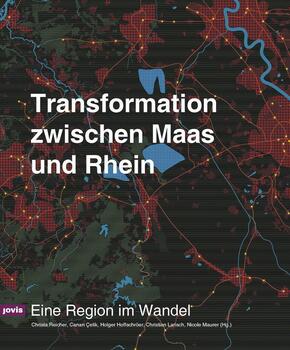
Looking from the open-cast mining landscapes of the Rhineland and the rolling hills of the Dutch Heuvelland to the River Meuse, you can see a diverse region in transition. But the starting points for these changes could hardly be more different-from the pressure to grow along the Rhine in North Rhine-Westphalia to the structural changes brought about by the phasing out of lignite and the redevelopment of a border region at the heart of Europe. Questions arise not only about the future of Europe's largest landscape construction site, but also about the power of the national border and the necessity for cross-border planning. The book uses numerous maps to provide an overview of the current situation and links this to innovative concepts and ideas for shaping the transformation processes. In addition to highlighting the different potentials and challenges of the different sub-areas, the book also illustrates the underlying processes. Operating at the increasingly important regional level, these ideas offer a glimpse into the distant future without losing sight of the here and now.
- Provides a comprehensive cartographic overview of the Rhine-Meuse region
- Proposes fundamental guidelines and examples for informal regional development and cross-border planning
- Suggests innovative strategies and concepts for urban and regional development
Christa Reicher ist seit 2018 Leiterin des Lehrstuhls für Städtebau und Entwerfen und Direktorin des Instituts für Städtebau und europäische Urbanistik. Seit 2023 ist sie zudem Inhaberin des UNESCO-Lehrstuhls für Kulturerbe und Städtebau. Zuvor hat sie das Ruhrgebiet durch ihre Professuren an der TU Dortmund und der FH Bochum mitgestaltet, zudem ist sie geschäftsführende Gesellschafterin von RHA REICHER HAASE ASSOZIIERTE GmbH.
Canan Çelik studierte Angewandte Geographie an der RWTH Aachen und der Charles University in Prag. Im Anschluss absolvierte sie ihren Master in Raumplanung an der TU Dortmund und der Hanyang University in Seoul. Seit 2018 promoviert sie am Lehrstuhl für Städtebau und Entwerfen und dem Institut für Städtebau und europäische Urbanistik. Sie befasst sich mit informellen und formellen Planungsprozessen im grenzüberschreitenden Kontext und ist zudem stellvertretende Leiterin des Lehrstuhls und Instituts.
Holger Hoffschröer studierte Stadtplanung in Dortmund und an der Michigan State University. Nach Stationen in Rotterdam, Essen und Dortmund ist er seit 2011 im Büro RHA REICHER HAASE ASSOZIIERTE GmbH tätig; seit 2018 als geschäftsführender Gesellschafter. Von 2012 bis 2014 war er Mitglied des Konvents der Bundesstiftung Baukultur und von 2015 bis 2018 wissenschaftlicher Mitarbeiter an der TU Dortmund. Seit 2011 ist er Lehrbeauftragter für Stadtplanung und städtebauliches Entwerfen an der TU Dortmund und der FH Münster.
Christian Larisch ist seit 2020 wissenschaftlicher Mitarbeiter am Lehrstuhl für Städtebau und am Institut für Städtebau und Europäische Urbanistik der RWTH Aachen. Dort promoviert er seit 2021. Er studierte Raumplanung an der TU Dortmund und begleitete die Planungsprozesse "Raumstrategie Rheinisches Revier 2038+" sowie "Raumstrategie Zuid-Limburg im euregionalen Kontext (ZL'EU)". Seine Arbeitsschwerpunkte umfassen Transit Oriented Development, Wechselwirkungen zwischen Mobilität und gebauter Umwelt, strategische Raumentwicklung sowie Stadt- und Regionalplanung.
Nicole Maurer Lemmens (1969) wurde im Süden des niederländischen Limburgs geboren und studierte Architektur, Städtebau und Bauwissenschaften an der TU Eindhoven. Sie gründete mit Marc Maurer das Büro Maurer United Architects. Als Kreativdirektorin arbeitet sie interdisziplinär zwischen Architektur, Raumplanung und Kunst. Als Dozentin lehrte sie an Akademien und Universitäten in den Niederlanden und Deutschland. 2020 wurde sie wissenschaftliche Mitarbeiterin am RWTH Aachen Lehrstuhl und Institut für Urbanistik.
Autorenporträt schließen