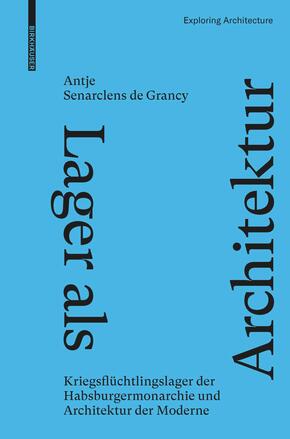


Lager als Architektur - Kriegsflüchtlingslager der Habsburgermonarchie und Architektur der Moderne
Reduzierte Artikel in dieser Kategorie

5,99 €
15,99 €
10,99 €
5,99 €
| Verlag | Birkhäuser Berlin |
| Auflage | 04.11.2024 |
| Seiten | 416 |
| Format | 17,0 x 3,5 x 24,0 cm |
| Gewicht | 1126 g |
| Reihe | Exploring Architecture |
| ISBN-10 | 3035627355 |
| ISBN-13 | 9783035627350 |
| Bestell-Nr | 03562735A |
Since 1945, camps as a form of temporary mass housing have been either ignored or discussed only in the margins of architectural history. In this book, Antje Senarclens de Grancy examines for the first time the camps built in the early 20th century within a context of modern architecture and urban planning.
In the refugee camp, modernist forms are condensed, accelerated and radicalized as if under a magnifying glass: ideas of rationalization and hygiene, of standardization and prefabrication, of urban planning, and of managing individual needs in a context of war and catastrophe. The focus is on refugee camps set up by the Habsburg state during the First World War as instant cities and planned by architects for purposes of internment and control.
The Exploring Architecture series makes architectural scholarship accessible, presents the latest research methods, and covers a broad spectrum of eras, regions and topics.
- A new perspective on modern housing and urban planning
- Architecture as a constant in the global history of the camp
- Previously unpublished photographs from Central European sources on wartime construction
